

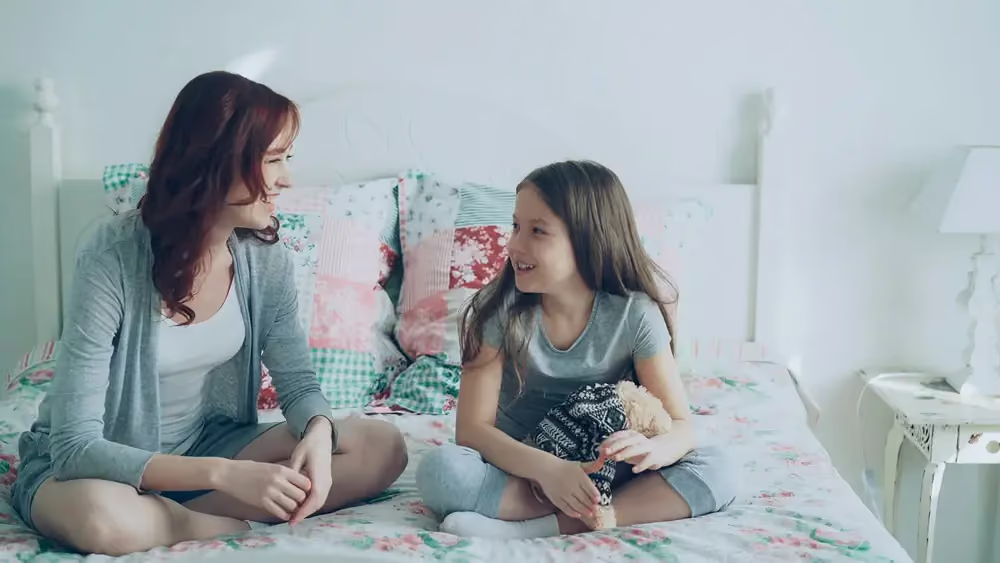
A child who comes to live with us does not stop having a family, and we never behave as if they do.
For most of our children, family remains the deepest relationship in their lives, whatever complications surround it. Loyalty, love, grief, anger, hope: often all at once. Care that ignores this, or quietly treats family as a problem, asks a child to split themselves in two. We refuse the split. A child should never feel they must choose between settling with us and loving their family.
In practice, that means contact arrangements are treated as a priority, not an admin task. Agreed contact happens as planned, is prepared for thoughtfully, and is followed up with care, because contact can stir up as much as it soothes, and a child may need support on either side of it. Where contact is supervised or limited, we hold the boundary without ever making the family the villain in the child's hearing.
It means honest communication with parents and relatives, done with respect. Families of children in care have often had bruising experiences of professionals. We speak to them as people who matter in their child's life, share what we appropriately can, and listen to what they know, because nobody has more history with the child than they do.
And it means honesty with the child. Children sense evasion, and half-truths about family corrode trust faster than hard truths delivered kindly. When the answer is difficult, we find the words for it, suited to the child's age and understanding, and we stay close afterwards.
Every child's situation is different, and the plan for family is set by those responsible for the child's welfare, with safety always first. Within that plan, our commitment is constant: we will treat your family with respect, because they are part of you.