

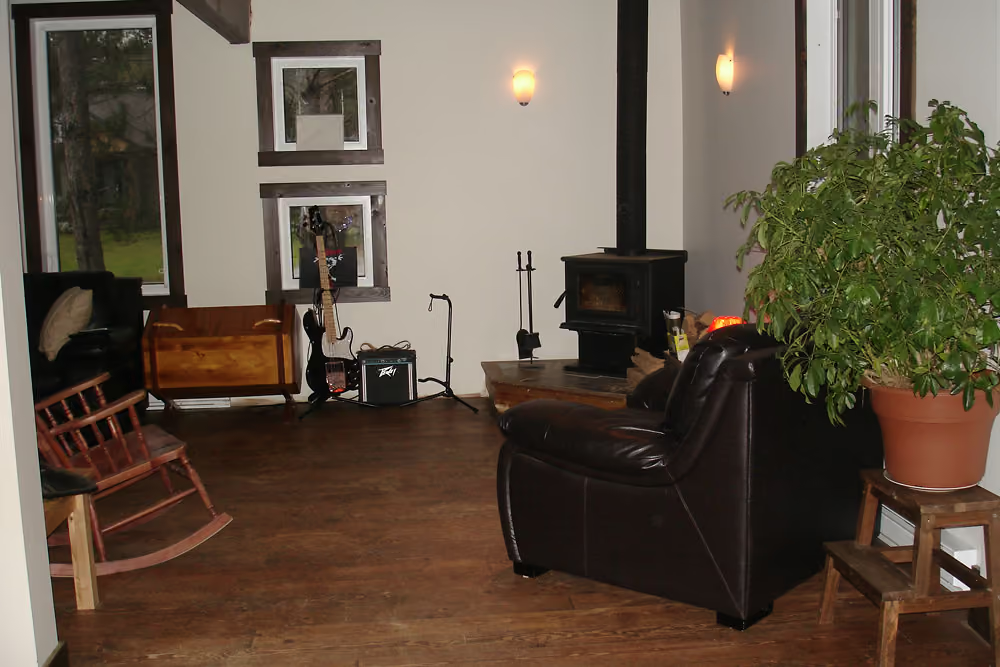
There are no signs on our doors. No lanyards at the dinner table, no office where a living room should be, no laminated rules on the kitchen wall. Visitors sometimes say our homes do not look like children's homes. That is the point.
A child's surroundings talk to them all day long. An institutional building says: you are a placement. A home says: you are a child who lives here. Sofas you can actually sink into, a garden with a football goal, photographs on the walls, a kitchen that smells of dinner. None of this is decoration. It is care, delivered through a building.
The details are chosen deliberately. Bedrooms are decorated with the child, not for them, because a room you chose is a room you can settle in. Shared spaces are kept calm and uncluttered, which matters especially for children who find busy environments overwhelming. Repairs happen fast, because a broken cupboard door left for weeks tells a child something about how much they matter.
We also think about what is absent. Keypads and locked doors are kept to the minimum the law and safety require, because every unnecessary lock is a message. Paperwork lives in the office, not on the fridge. The atmosphere we are after is the one you would want for your own child: safe, warm and unmistakably domestic.
None of this replaces relationships. A beautiful building with cold adults in it is still a cold place. But the reverse is also true: warm adults working in a stark, institutional space are pushing uphill. Get the environment right and it quietly does some of the work, every hour of every day.
When a child walks in for the first time and says it does not look like a children's home, we take it as the compliment it is.