

By the time a child arrives at one of our homes, the visible work is nearly done. The real work happened before the car pulled up, and continues in the first two days, which shape everything after them.
Before arrival, we learn everything we can. Not just the file, but the human detail: what foods feel safe, what music helps, what bedtime looks like on a good night, which words or situations to avoid. The bedroom is prepared with what we know of the child in mind, and something waiting that says you were expected: a duvet in a colour they like, a towel that is theirs, their name nowhere institutional but their presence everywhere.
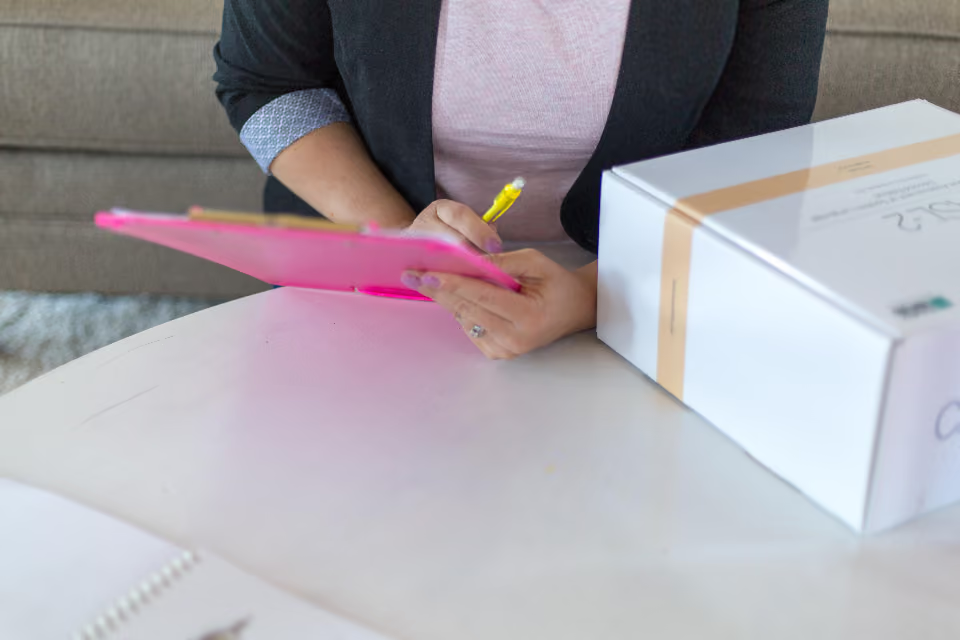
The welcome itself is kept deliberately small. No crowd at the door, no tour delivered like an estate agent, no forms on day one that can wait. One or two adults, a look around at the child's pace, food available without ceremony, and the essentials said simply: you are safe here, this is your room, this is who is here tonight, this is what happens in the morning.
Then the first 48 hours run on predictability and low pressure. Meals at the times we said. The adults we said would be there, there. Questions answered honestly, including the hard ones. No expectations of gratitude, settling or good behaviour, because a child in the first days of a placement is doing something enormously difficult, and their job is not to make us feel successful.
The children already living in the home are prepared too, because an arrival changes their world, and they deserve care around that.
Nothing about a good welcome is complicated. It is thoughtfulness, done in advance, delivered calmly. But children remember how they arrived long after they have forgotten the details. We want that memory to say: they were ready for me.