
In our care for children with learning disabilities and autism, positive behaviour support, or PBS, is one of the frameworks that shapes daily life. Like most good ideas, it rests on a simple premise: all behaviour is communication.
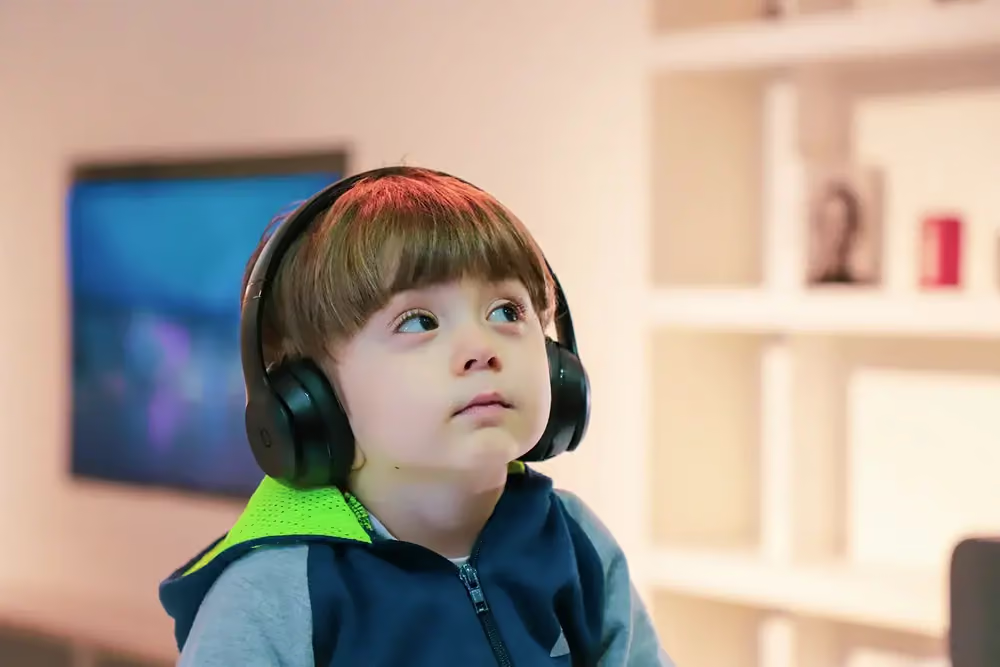
A child who cannot easily say the noise is too much, or I do not understand what is happening next, or I am frightened, will tell us another way. Behaviour that looks challenging is usually a message in the only language available. PBS begins by working out what the message is. That means careful observation: what happens before, what the behaviour achieves, what changes when the environment changes. Slowly, a picture forms of what the child is telling us.
Then the real work: changing the world so the message no longer needs shouting. If transitions cause panic, we build warning and ritual around them. If noise overwhelms, we quieten the environment rather than the child. If uncertainty is the enemy, visual timetables, consistent routines and clear communication shrink it. And crucially, we teach and strengthen better ways for the child to be heard: symbols, signs, simple phrases, whatever works for them, so that communication succeeds without distress.
What PBS is not is a system of rewards and consequences aimed at stamping behaviour out. Suppressing a behaviour without answering its message just forces the message to find another route. The aim is a child who needs the behaviour less, because their world makes more sense and their voice works better.
Progress can look modest from outside: a haircut tolerated, a supermarket managed, a new food tried. Inside, each is a small revolution.
For our teams, PBS is a discipline of curiosity and humility. The question is never how do we stop this child doing that. It is always: what are they telling us, and how do we make it easier to say?